



Articles

China’s long arm against Falun Gong now reaches Italy too

We are pleased to receive and publish the report sent to us by the Italian Falun Dafa Association on the Chinese Communist Party’s (CCP) transnational repression against Falun Gong. FOB has on several occasions addressed the dire situation faced by Falun Gong practitioners (and others) in China, who are victims of abuse, arbitrary detention, killings and forced organ harvesting. The issue had also come to the attention of the European Parliament, which, in a resolution dated 18 January 2024, took a stand against the persecution of Falun Gong in China.

Europe’s new “managerial secularism” is putting freedom of religion or belief at risk

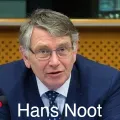
By Hans Noot, HRWF — Across Europe, the relationship between the state and religion is changing. Studies show that government restrictions on religion have reached their highest levels in the last 20 years. New reports point to growing legal and social pressure on religious minorities. Instead of the older model that gave people wide freedom to live out their beliefs, we now see a kind of “managerial” secularism.

The Need for a Religious Freedom Reform in the post Orbán Hungary

In the aftermath of the Orbán era, Hungary faces the long and difficult task of repairing the profound damage inflicted on its religious landscape. Over a period of 15 years, hundreds of minority religious communities were stripped of their legal status, de-registered, and pushed to the margins through a system that placed political discretion above basic human rights and fundamental freedoms. This pattern — where the government delegitimises minority faiths, centralises State control over religious recognition, and rewards only politically aligned groups— has been observed in several non‑democratic countries.

The Norwegian Supreme Court rehabilitates Jehovah’s Witnesses and freedom of belief

On 29 April 2026, the Norwegian Supreme Court quashed the ruling that had revoked the Jehovah’s Witnesses’ registration and their consequent access to state funding.

The Court also emphasised that the threshold for denying access to state funding and registration is high, and that Article 6 of the Norwegian Act on Religious Communities must be interpreted in the light of the autonomy of religious communities enshrined in Article 9 of the ECHR, read in conjunction with Article 11.

“Law and Tax 228”: The Truth Behind the Fabricated Case Against Tai Ji Men

by Alessandro Amicarelli — Before Taiwan’s 228 Peace Memorial Day, Taiwan’s Democratic Progressive Party (DPP), which is currently in power, posted on social media that the scars of history live not only in the hearts of the victims’ families but also in the public sphere. Remembering the truth, clarifying responsibility, and remaining vigilant to avoid repeating past mistakes are duties shared by all Taiwanese—regardless of political party, ethnicity, or generation, the DPP wrote.

FRANCE: When ‘anti-cult deviances’ clash with human rights

By Willy Fautré, director of Human Rights Without Frontiers — At the beginning of April, various parties publicly expressed, with complete impunity, their strong opposition to the freedom of worship and assembly of Jehovah’s Witnesses wishing to publicly commemorate their annual “Memorial of Jesus’ death” in various towns across France, which corresponds to the Catholic celebration of Easter.

OSCE Assessment of France: Secularism, Security, and the Question of Minorities

The OSCE's 2026 report on France praises efforts against antisemitism but criticizes MIVILUDES for lacking transparency. Delegates note that strict secularism often discriminates against minority groups like Scientologists and Jehovah's Witnesses. Recent judicial rulings against the state body highlight the tension between state vigilance and international human rights standards regarding freedom of religion and due process.

Commission designates Special Envoy for Freedom of Religion or Belief outside the EU

The European Commission has decided to designate Mairead McGuinness as Special Envoy for freedom of religion or belief outside the EU. In this capacity, she will report to Commissioner Brunner, who is in charge of leading the Commission's dialogue with churches and religious associations or communities, and with philosophical and non-confessional organisations, and will provide support for intercultural and interreligious dialogue processes outside the European Union, including with national authorities, organisations and representatives of different faiths.

FOB welcomes three new members of its Scientific Committee

FOB is glad to announce that three new scholars are joining its Scientific Committee: Brandon Taylorian, Mark Nemes and Karolina Maria Kotkowska. With their experience in law and religion, contemporary forms of belief and practice, and the study of esotericism and new religious movements, they will help FOB to follow more closely the situation of belief communities and the challenges they face in today’s rapidly changing environment.

Egregious Religious Freedom Abuses From Key Nations Exposed by USCIRF 2026 Annual Report

Washington, DC – The United States Commission on International Religious Freedom (USCIRF) today released its 2026 Annual Report. The report documents religious freedom conditions throughout 2025 and sets forth U.S. policy recommendations to the President, the Secretary of State, and U.S. Congress to advance freedom of religion or belief (FoRB) abroad. 

Japanese justice persist on the path of religious intolerance towards the Unification Church

A year ago, we published an analysis by lawyer Patricia Duval, a member of the FOB Scientific Committee, on the situation that had arisen in Japan with respect to the Family Federation for World Peace and Unification, formerly known as the Unification Church, culminating in the request for the Church's dissolution.

The Global Landscape of State Bans on Religion and Belief Systems

By Brandon Taylorian — Around the world, states continue to ban religious communities outright, criminalise membership in certain denominations, or impose administrative penalties that effectively prohibit religious practice. While international human rights law – including Article 18 of the Universal Declaration of Human Rights and the International Covenant on Civil and Political Rights – protects freedom of thought, conscience and religion, a significant number of governments maintain legal frameworks that suppress specific faith groups.

Two Dates, One Struggle: February 28 and the Tai Ji Men Case

By Alessandro Amicarelli — Two dates–February 28, 1947, and December 19, 1996–50 years apart prompt us to reflect on democratic progress in Taiwan.

February 28, 1947, has become part of the country’s collective memory. That day marked the escalation of tensions between the new rulers from mainland China and the local population. State Monopoly Bureau agents beat a woman selling cigarettes, a man was shot and killed, and what began as a protest turned into a nationwide uprising that led to a massacre. Soldiers intervened, people disappeared, and countless locals lost their lives. For decades, this topic remained taboo, discussed only in hushed tones at home.

EGYPT: The case of persecution of Ahmadiyya religion of Peace and Light (AROPL) brought to the attention of the UN Human Rights Council

Our sister organization CAP Liberté de Conscience, together with Human Rights Without Frontiers and International Support for Human Rights, has once again defended the minority Islamic religious group Ahmadiyya Peace and Light (AROPL) in a written statement to the Human Rights Council. AROPL members are subjected to serious acts of intolerance and violence by the Orthodox Muslim community and the Egyptian authorities.

The 4th World SangSaeng Forum 2025 – reconciliation, interreligious dialogue, and freedom of belief

Scholars, religious leaders, and representatives of international organisations from eighteen countries met for lectures, communal meals, and visits, on the occasion of the 4th World SangSaeng Forum hosted at Daejin University in South Korea from 23 to 27 October 2025. The programme was rich and varied including both keynote lectures by well‑known international scholars and parallel sessions on emerging religions, the ethics of reconciliation, and comparative spirituality, and also moments specifically devoted to interreligious dialogue with East Asian religious movements, as well as a field trip to the National Museum of Korea and an academic visit to Yeoju.

Remembering Rev. Jesse Jackson (1941-2026) – a life for human rights and religious freedom

by Alessandro Amicarelli — Rev. Jesse Jackson's death feels, for many of us, like the end of a long season in the history of civil rights in the United States. For over fifty years, he was a famous name and a regular presence on television. Someone people expected to see turning up at times of protests, rallies, and anytime marginalised communities needed help and support. For this reason, most people still associate his face first and foremost with the civil rights movement. And religious freedom for Rev. Jackson was part of those battles, a pillar of human dignity.

Punjab government sets minimum marriage age at 18: Is this the end of forced marriages?

Good news from Pakistan. The Punjab government has issued an ordinance effective immediately, setting the minimum marriage age for both boys and girls at 18. Violations of the law are now classified as prosecutable, non-bailable, and non-reconcilable offenses. The law applies to all Pakistanis, both Muslims and non-Muslims. The intent is to eliminate the barbaric practice of conversions and forced marriages perpetrated by Muslims to which young women (often minors who are still children) belonging to Christian and Hindu minorities are subjected.

The latest frontier in the suppression of freedom: banning religious activities in private homes in Russia

On October 28, 2021, the Supreme Court of Russia ruled that Jehovah's Witnesses who pray in groups are not committing a crime and therefore cannot be prosecuted, opening a loophole in Article 282.2 of the controversial Yarovaya Law. Now, the Russian political party New People, founded in January 2020 and considered “liberal,” has proposed draft laws in 2024 and 2025 aimed at restricting religious services, rites, and ceremonies within residential and non-residential buildings, thus limiting several inalienable freedoms, as illustrated in the following article by Human Rights Without Frontiers.